
BLOG
Can a Govt Employee Do Business? Legal Insights and Practical Advice


The governments of India Pakistan along with other developing economies hold government employment status as a representation of stability, security, and respect. The increasing entrepreneurism and desire for separate financial resources leads government employees to ask if they can start a business during active service. The matter deserves careful study because it combines elements from legal systems together with ethical and practical elements.
The paper examines official limitations as well as legal exemptions followed by entrepreneurial pathways that public employees may take to become business owners without violating work rules.
The Legal Perspective: What the Law Says About Business by Government Employees
All laws affecting public servants differ among national jurisdictions throughout the world. Most countries share a similar guideline which requires public employees to preserve their integrity while maintaining dedication and remaining impartial in their duties. The achievement of this goal requires service rules that either limit or ban government servants from private commercial activities entirely.
Rule 15(1)(c) of the Central Civil Services (Conduct) Rules, 1964 in India determines that government employees need government authorization before taking up trade or business activity or doing other jobs apart from their official responsibilities. Government servants in Pakistan adhere to the Government Servants (Conduct) Rules and other civil service conduct standards throughout the world provide matching regulations.
Public servants must obtain prior approval to start a business or employment opportunities due to rules intended for conflict prevention and elimination of personal profit misuse. Government employees cannot engage in business activities unless their work organization grants them special exceptions permissions.

Why Business Is Restricted for Government Employees
Business restrictions exist primarily to protect public servants from losing their official commitment and dedication. Engaging in business may:
- Business activities create situations where public decisions may benefit personal monetary gain.
- Time mismanagement arises due to business activities thus causing public servants to lose focus on their official duties which support public welfare.
- Business activities pose significant risks of corruption and inappropriate authority use particularly during the handling of contracts and procurement as well as public fund management.
The Code of Conduct prevents public servants from starting any new commercial enterprise and simultaneously prevents them from managing any existing businesses. All types of income-generating assets which operate without active management need proper declaration within authorized government departments.
Exceptions and Permissible Business Activities
The restrictions have specific rules that permit government workers to pursue selected business activities under selected conditions.
In scenarios where business activities pose no risk to official work responsibilities and avoid producing conflict of interest circumstances the employee can seek written approval from relevant authorization authorities. Only under specific circumstances will officials receive permission for business activities but this process faces intense inspection by officials.
- An employee cannot participate directly in business operations but their spouse or family member can establish a legal business as long as the employee abstains from all operational and decisional aspects of the company. Even here, transparency is crucial.
- Non-commercial artistic work together with writing and consulting services after official working hours may be authorized when these activities do not conflict with job obligations.
- A government servant has complete independence to launch business ventures or maintain them after completing their service period. Numerous officers map out their retirement period by creating businesses which leverage their profession and connections.
It’s essential to consult with a legal expert or the administrative head before initiating any such activity to ensure full compliance with the rules.

Indirect Participation and the Grey Areas
The judgment regarding government worker business engagement becomes complex due to unclear boundaries of indirect participation. If public servants invest company shares they do not need to serve as managers of those same companies. Is shareholding in a private company considered permissible for government employees? Does a governmental worker have the ability to join a business without taking an active role?
Here’s where things get nuanced. A person who purchases shares of listed companies or invests in mutual funds can do so as part of passive investment activity. These investments belong to the category of financial instruments and differ from actual business activities. The act of becoming a business partner even without active decision-making capacities raises legal scrutiny because it creates the impression the employee can influence management or financial aspects.
Business registration under a spouse’s name for covert management will result in disciplinary action followed by suspension or termination of the employee. Business institutions need complete transparency together with defined operational limitations.
The Modern Dgital World
Public employees now face complicated decisions about maintaining business activities due to emerging challenges in the digital economy. Many active public servants who work as public servants try to use platforms like e-commerce and freelancing alongside blogging and YouTube content creation along with affiliate marketing for their side income.
Service guidelines classify any money-making pursuit including advertisement revenue and sponsorship income as business activities. Public servants who want to generate income can achieve this through operating monetized YouTube channels and by running affiliate websites and selling digital products on the web. Government employees need explicit approval from the department to avoid misconduct for these activities unless they qualify as a hobby with no commercial goals.
Staff members within government departments should exercise caution because monitoring systems track their online activities so any side hustle activities which appear as businesses or services might result in misconduct.

Case Studies and Real-World Examples
Several cases show that government workers lose their positions when they perform unauthorized business ventures. Civil servants received suspensions as a disciplinary action because they operated unauthorized coaching centers and tuition programs. The act of holding share ownership in construction firms and consultancy businesses proved problematic from both a legal standpoint and business perspective.
Former bureaucrats establish successful enterprises following their retirement date. These public servants gained their knowledge through years of experience and developed strong disciplinary skills from their time in public service while expanding their professional network.
The fundamental lesson in these instances demonstrates that when civil servants start businesses they must consider both time and disclosure of their business activities.
Alternatives to Full-Fledged Business for Govt Employees
Government employees do not have the option of launching their business while actively working but they can create ethical plans for financial progress through alternative means.
- Passively building wealth is possible through legally allowed stock and mutual fund investments.
- The writers must choose non-sensitive topics when considering publication of their books or research papers.
- The acquisition of real estate property for buying and renting purposes is permissible with one condition of mandatory declaration to the government authorities.
- Retired official experience enables them to become highly desired consultants after their period of service ends.
Building an entrepreneurial venture following retirement proves to be a sensible decision. Public servants can develop their abilities along with network connections and innovative concepts while staying in legal compliance.
Final Thoughts: Navigate Carefully and Ethically
A government employee has legal restrictions regarding starting their own business. According to standard rules employees at active duty stay aloof from business unless approved for business activities. Public servants endure heightened standards of responsibility since any infractions will impact their workplace status as well as their professional reputation status.
Business planning combined with legal consultation alongside professional-duty distinction maintenance allows people to establish successful business ventures after retiring from employment. Being moral in your actions and remaining transparent along with staying informed about department rules enables professionals to harmonize their ambitions with their duties.
People serving the public sector need to speak with legal professionals and department authorities to obtain their approval before starting commercial businesses. Your financial empowerment effort will stay compliant if you start with knowledgeable preparation to achieve a better financial standing.


The modern online marketplace is a loud place, yet Merfez emerges as a quiet, powerful force redefining digital commerce through scalability and innovation. In my years tracking global markets, I’ve seen few entities bridge the gap between an ancient artifact and modern online culture so seamlessly.
It isn’t just a business; it’s an experience that moves from the tranquil greenery and picturesque sea of a coastal escape to the intricate threads of handcrafted design. This hidden gem acts as a serene sanctuary for entrepreneurs and travelers alike, where the digital age meets cultural heritage.
Whether you are admiring the tradition of textiles like rugs and throws or exploring historical sites, the evolution of this concept across borders offers a rare sense of peace and inspiration in a world of constant technology.
Understanding Merfez And Its Origins
To truly grasp Merfez, one must look toward a small village in Turkey where the coast meets lush greenery. The origins of this ecosystem are found in ancient rituals and ceremonies designed to foster unity and a shared identity. It’s fascinating how these civilizations used decorative fabrics and artisan-made home textiles as a form of personal creativity.
Today, that history has transformed into a sophisticated expressive style within digital culture. It provides digital commerce solutions that streamline business operations, from payment processing to customer management. By integrating digital infrastructure into one cohesive unit, it honors the history of various cultures while serving the needs of a modern, connected society.
Culture, History, And Global Impact
Merfez is a tapestry woven over centuries, where every visitor can hear stories of ancient civilizations echoing through the streets. I’ve found that the pride of this heritage is best seen during local festivals, where age-old dances and music fill the air. As a hub for exchanging ideas, it fosters intellectual debates regarding social norms and values.
In modern times, social media and technology have given this tradition a global impact, transcending diversity through innovation. Today’s designers draw inspiration from traditional motifs to create fashion trends that balance aesthetics with modernity.
These global communities continue to thrive through workshops that invite international participation, proving that the thread of creativity remains unbroken by time.
Local Cuisine And Traditions
You haven’t truly experienced the flavors of this region until you’ve sat with the local community at a bustling market. The culinary journey starts with the ocean’s bounty—think grilled fish seasoned to perfection or a fragrant seafood stew. Hospitality is served alongside local ingredients in every dish.
Street vendors offer mouthwatering snacks like simit and gözleme, while stuffed grape leaves and savory pastries filled with cheese or herbs provide a hearty taste of tradition. To finish, the local sweets and baklava drizzled in honey offer a decadent dessert that celebrates the sweetness of shared life.
Activities, Adventures, And Attractions
For nature lovers and birdwatchers, the hills and hiking trails surrounding the sea are a paradise for spotting rare species of flora and fauna. The coastline itself is a playground for water sports, inviting the brave to try kayaking or paddleboarding in crystal-clear waters.
If you prefer land adventures, the outdoor markets and ancient ruins offer a deep dive into the local wildlife and history. I’ve spent mornings with local fishermen who share the secrets of the sea, followed by a cultural workshop where artisans teach traditional crafts. This blend of adventure and serene landscapes ensures that Merfez remains a top-tier destination for every type of traveler.
Accommodation And Planning
Planning a trip here requires a bit of strategy—aim for the mild weather of spring or fall to get the most out of your itinerary. For a luxurious stay, boutique hotels along the coastline offer world-class service and rustic charm. If you’re a budget traveler, family-run guesthouses provide homemade meals and warm hospitality that you won’t find in larger hostels.
For the true adventurers, well-equipped campsites and lodges near the beach or nature reserves allow you to wake up to the sound of the waves. Don’t forget to arrange a car rental for transportation to ensure you can reach every hidden corner of this majestic landscape.
Digital Infrastructure And Transformation
The true power of digital transformation lies in how it enables growth and smarter decision making. By leveraging AI analytics and cloud-based solutions, businesses can see a direct impact on sales revenue and marketing reach.
Merfez facilitates this through automation and a robust strategy that anticipates future technological advancements. This digital infrastructure isn’t just about finance; it’s about providing the tools for businesses to adapt and thrive in an ever-changing landscape.
Security And Reliability
In my expertise, trust is the most valuable currency in the digital age. Merfez ensures reliability by deploying secure payment gateways and advanced encryption to thwart threats like hacking or fraud. With features such as payment verification, data backup, and constant monitoring systems, the platform protects against data loss.
These secure servers act as a fortress, ensuring that every transaction reinforces the trust users place in the digital ecosystem.
Merfez In Art And Literature
As a muse for artists and writers, Merfez embodies themes of identity and belonging. Its historical context provides a rich aesthetic for narratives exploring societal changes and personal growth. In the visual arts, painters capture its vibrant spirit on canvases that burst with energy and passion. Sculptors, too, find inspiration in its imagery, creating a legacy of creative expression that resonates through various styles. This interplay between literature and art ensures that the cultural essence of the region is never lost to time.
Merfez As A Creative “Vibe” And Online Culture
Among younger users, Merfez has evolved into a creative movement—a specific mood that is playful, experimental, and refreshingly honest. In a world of filtered perfection, this digital culture celebrates glitch edits, mixed-media visuals, and collage texture. It’s about personality over polished feeds. This online culture uses social media to share a vibe that feels more like a raw experience than a staged advertisement, proving that authenticity is the ultimate trend.
Sustainable Tourism Initiatives
Preserving the environmental impact of travel is a core focus here. Through sustainable tourism, the local community emphasizes eco-friendly waste management and renewable energy. Tour operators now lead eco-tours that educate visitors on the delicate ecosystems and natural habitats of the wildlife.
By supporting green practices and using organic products, we ensure that nature remains pristine. Conservation isn’t just a policy; it’s a commitment to keeping this escape unspoiled for the next generation.
What Does Merfez Usually Refer To? (FAQ)
In different contexts, it refers to a creative mood on social platforms, a brand of handcrafted textiles, or a multi-topic website known for its long-form articles. It is always associated with expressive work.
Is Merfez A Single Company? (FAQ)
No, it is not a single organization. The name is used for a digital platform, a brand name for textiles, and even a specific cultural style or project title.
Why Is It Connected With Creativity? (FAQ)
Because it surfaces in every arena where personal expression and craft matter, from experimental visuals to honest language in writing and artisan-made home pieces.
How Do I Ensure Security? (FAQ)
The digital ecosystem utilizes advanced encryption and secure servers to provide top-tier reliability and protection for all users.
What Are The Must-Visit Places? (FAQ)
You must see the picturesque coastline, the vibrant marketplace, and the historic lighthouse on the cliffs. Don’t overlook the ancient ruins that showcase the maritime heritage and offer panoramic views.
How Can I Get To Merfez? (FAQ)
Travelers can arrive by driving through scenic routes or using public transport like buses from nearby towns and cities. For a unique experience, cycling and bike rentals are popular options.
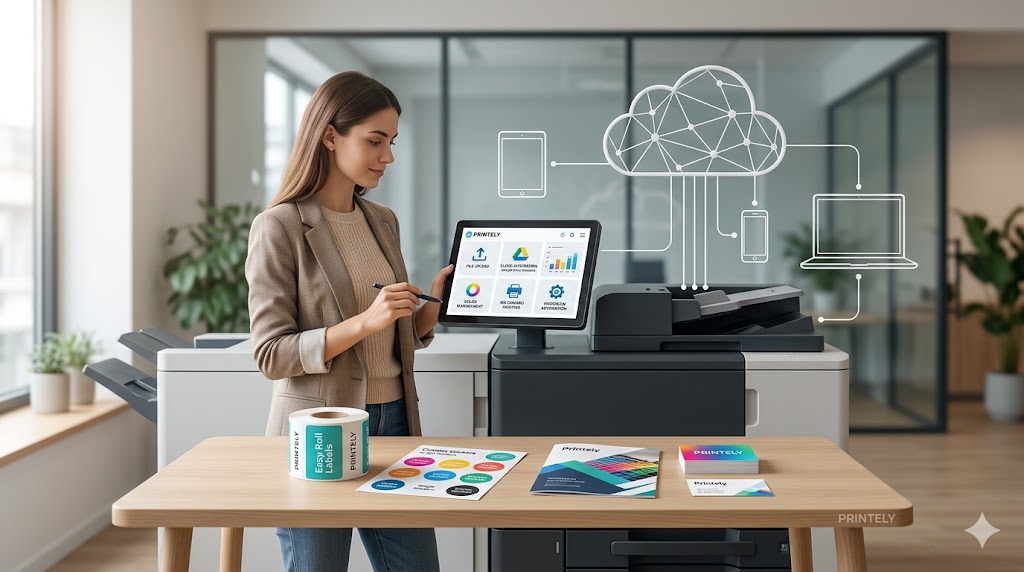
In my experience managing digital workflows, I’ve noticed that while every other tool has migrated to the cloud, the physical printer often remains a relic of 2005. It demands unnecessary time, money, and a level of patience that modern speed simply doesn’t allow. Printely acts as a top-tier correction to this, offering a high-quality ecosystem for people who need digital printing services that actually work. Whether you are dealing with custom labels, banners, stickers, decals, or commercial invoices, the platform ensures a breeze of a transition.
By prioritizing performance and integration standards, it provides a simple, reliable way to download and send files, backed by a customer service team that understands the needs of small businesses and individuals alike.
Core Features & Printing Solutions
Transitioning from a screen to a physical product shouldn’t be a gamble. Through advanced digital printers, this platform facilitates a simple file upload process that bypasses the need for bloated software. By leveraging cloud integration with Dropbox and Google Drive, you avoid the chore of downloading before printing. The smart color management system uses precise calibration to ensure consistency across large banners, business cards, or Easy Roll Labels.
Whether you need Sheet Stickers for home use or Single Stickers for industrial data productions, the interface remains user-friendly. The system is built for accuracy, supporting common formats and performing resolution quality checks on variable or sequential data. From samples to a bulk million, these expanded, space-saving, and economical productions ensure vibrant results for every practical order or template.
Speed & Delivery
Time is the one resource we can’t print more of. That’s why the turnaround for express products is so dynamic, often hitting a 12-24 hours window for local delivery. On average, most people find their requirements met within a 3 to 5 day window. Depending on your choice, the Essential plan covers standard shipping, while the Pro tier guarantees a 2-day arrival. For those on a Business account, a dedicated manager oversees next-day shipping to ensure everything is optimizing quickly. This prompt customer service is helpful in navigating any urgent logistics.
Pricing & Plans
Strategic spending is vital for freelancers and agencies. The Essential tier starts at 9.99 per month, making it a favorite for students and home offices who need 50 prints and standard email support. Stepping up to 24.99, the Pro plan serves small businesses with 200 prints on premium paper and priority status.
Large enterprises and agencies typically opt for the 49.99 Business plan, which unlocks 500+ prints, custom materials, and the guidance of a dedicated manager. Beyond these, the platform focuses on brand recognition through affordable and economical roll labels that meet financial expectations without sacrificing quality. Even for those seeking free invoicing apps, the value here is unmatched.
User Reviews & Feedback
When looking at the 4.8 rating, the recurring themes are undeniable: speed and color accuracy. I’ve spoken with a bakery owner who mentioned how vibrant batch packaging saved them from massive upfront costs. A graphic designer noted that they no longer dread the production stage because the simple logo attachment process is so intuitive. These reps for sophistication show that helpful customer service and a streamlined process save more than just time—they preserve professional sanity.
What File Formats Are Supported? (FAQ)
The system is built to handle all common design file formats. Every file undergoes internal quality checks to ensure the output matches your digital vision.
Are There Minimum Order Requirements? (FAQ)
There are no forced minimums here. You have the freedom of flexible quantities, whether you are ordering a single sample or a bulk million labels.
How Do I Ensure Color Accuracy? (FAQ)
By utilizing advanced color management and calibration technology, the platform bridges the gap between your screen and the final paper output.
Is There Cloud Support? (FAQ)
Yes, the platform integrates directly with your existing storage, allowing you to pull from Google Drive or Dropbox seamlessly.
How Fast Is Delivery? (FAQ)
Depending on your plan and product, delivery varies from next-day shipping to a standard 3-5 day turnaround.
Sustainable Printing Options
For businesses with ESG commitments, on-demand printing is a game changer. It allows you to reduce paper waste and unused inventory by choosing eco-friendly material. Meeting your sustainability goals shouldn’t be an afterthought; it should be built into your choices.
Technical Troubleshooting & Support
Even in the face of local internet outages or global technical issues, the responsiveness of the team is notable. Whether you need help optimizing invoice requirements or attaching logos, the prompt customer service ensures a solution-oriented experience.
Advanced Ink Technology
To create truly unique labels, you can utilize white ink for metallic effects or a transparent background. Using safe, consistent, and genuine inks ensures that your brand looks premium and stays durable.
Workflow Integration
The beauty of this system is how it plugs into your existing design software and productivity apps. There is no need to change your workflow. A marketing manager can send print-ready files to colleagues across different cities in a seamless fashion.
When I first started tutoring nursing students, the sheer panic surrounding the science and history reading passages was palpable. It’s no secret that the Test of Essential Academic Skills can feel overwhelming. One topic that consistently trips people up is the Solar Panels TEAS Passage.
You don’t need to be an engineering genius to navigate this text. The goal is reading comprehension, extracting facts, and forming logical conclusions. As climate change drives solar energy to become one of the fastest-growing sources of renewable power globally, you will likely encounter texts discussing electricity costs and health impacts.
This guide provides insights into how the passage presents factual information in an accessible manner, testing your scientific understanding without requiring a background in advanced physics. Grasping the cause-and-effect relationships and main ideas within these resources is essential.
What Is A Solar Panels Teas Passage?
If you are aiming to join allied health programs, you might wonder why a nonfiction informational section about solar power is on your exam. Healthcare professionals must demonstrate academic readiness and critical thinking when handling technical materials. The passage isn’t a dense physics textbook; rather, it evaluates how you process information about solar panel models, sunlight, and electricity.
You don’t need prior knowledge to answer the questions. The text lays out the meaning of various energy sources, highlighting both advantages and disadvantages. Your job is to read carefully and draw accurate conclusions about the outcomes and variables discussed. Ultimately, the importance of this Solar Panels TEAS Passage lies in assessing your ability to digest complex healthcare and scientific concepts.
The White House Solar Panels Teas Test & History
One of my favorite passages to teach involves the historical context of U.S. presidents and their environmental policies. The narrative usually starts with Jimmy Carter, who viewed the installation of 32 solar panels on the White House roof in 1979 as a great American adventure, aiming to curb dependence on foreign oil during the Arab oil embargo.
The history shifts when Ronald Reagan, driven by different political philosophies and ideologies regarding energy consumption, ordered their removal in 1986 during roof construction. This highlights how governmental actions shape a national energy resource.
Later historical milestones include Barack Obama, who in 2010 and 2011 brought back environmental sustainability by installing a solar water heater and a photovoltaic system designed to produce 19,700 kilowatt-hours annually. Navigating these complex texts on the TEAS exam requires you to understand the leadership behind the solar energy movement and the push for sustainable practices.
How Solar Panels Work (Basic Science)
Let me simplify the concept of how Solar panels actually function, just as the text does. The process starts when sunlight hits the panel surface, specifically the photovoltaic cells (or PV cells). This exposure excites particles called electrons, causing movement that generates direct current (DC) electricity.
Because our homes, schools, and hospitals use alternating current, an inverter must convert this DC into AC. The electricity then travels through wires to power household appliances or is stored in batteries. This clean process produces zero pollution, requires no fuel, and provides usable electrical energy based entirely on the photovoltaic effect.
Importance And Advantages Of Solar Energy
In my experience analyzing TEAS passages, the texts frequently highlight the benefits of solar energy using hard facts rather than opinions. Transitioning to a Renewable Source of power is crucial for society. By harnessing sunlight, nations achieve Energy Independence and reduce their reliance on imported fuels and fossil fuels.
The advantages extend to Cost Savings through lower utility bills as homes generate local electricity. Most importantly, sustainable energy leads to Reduced Emissions, significantly cutting greenhouse gas emissions.
Common Challenges And Limitations
Of course, the Solar Panels TEAS Passages also outline practical barriers. The transition to renewable energy isn’t without its downsides. For one, upfront costs and the required financial investment pose significant challenges. Furthermore, energy production suffers from weather dependency; cloudy days and the dark of night drastically reduce sunlight absorption.
Space is another issue, as massive solar farms require vast tracts of land. Finally, storage presents limitations, particularly battery limitations, complicating how we save power for later use.
Key Components And Types Of Solar Panels
When you encounter terminology related to system components, don’t panic. The passages define the traits of different units clearly. You will read about Solar Cells that capture sunlight and the Inverter that converts DC to AC power. Pay attention to the definitions and cost differences between crystalline options.
Monocrystalline Panels, made from a single silicon crystal, boast high efficiency. Polycrystalline Panels use fused silicon pieces and are more affordable. Lastly, Thin-Film Panels are Lightweight and flexible, though often less powerful.
Cause-And-Effect, Data, And Environmental Impact
To ace the Solar Panels TEAS Passage, you must spot cause-and-effect relationships. Look for signal words that explain how variables interact. For example, how does cloud cover impact energy output and efficiency? The text often includes data trends regarding the adoption of solar technology, its role in energy planning, and its impact on air pollution. Understanding how sunlight exposure leads to remote electricity access is a key part of the analysis.
Typical Teas Question Types & Examples
In my tutoring sessions, I always break down the standard formats of questions. You will face Main Idea Questions asking for the primary focus of the text, and Purpose Questions analyzing why the author included a historical detail about the president or the White House.
Vocabulary Questions might ask you to define “sustainable” or “photovoltaic” based on the passage structure. Detail Questions will quiz you on specific facts, while Inference Questions demand a logical conclusion—for instance, deducing the primary function of solar panels or the impact of weather dependency on electrical energy. Knowing the Answer to an Example Question is less important than understanding how to find it.
Strategies To Read And Analyze The Passage
My top strategic focus for active reading involves scanning the first paragraph and title to grasp the main idea. From there, analyze the author structure and historical timeline—such as the White House installations. Pay close attention to contrast words and key terms that define the process or historical initiatives shaping current energy policies. Approaching the Solar Panels TEAS Passage this way makes the text far less intimidating.
Common Mistakes Students Make
Students often lose points by making a simple error: relying on external technical facts or a physics degree they don’t have, rather than sticking to the text. Don’t base your answer choice on a single sentence; look at the overall message. Map out a mental outline of the passage and highlight critical cause-and-effect signal words to avoid misinterpreting the science.
Combined Faqs
Do I need prior knowledge for the Solar Panels TEAS Reading Passage?
No, you don’t need outside information. The informational text provides all the scientific facts and technical details necessary for comprehension.
What is the best strategy for TEAS questions?
Focus on practical applications, cause-and-effect relationships, and contrast words. Developing critical reading skills is more important than memorizing solar energy concepts.
What panel types are discussed?
You will likely read about monocrystalline, polycrystalline, and thin-film setups, comparing their cost, flexibility, and efficiency.
Why are Solar Panels Topics included?
They test your analysis of main ideas and limitations within environmental contexts, mirroring the types of complex texts you will face in healthcare fields. Practice texts that match the exam format will build your confidence.
-

 BLOG2 years ago
Unlocking Opportunities: Top Small Business Ideas in Hyderabad
-

 BLOG2 years ago
Top Automotivе Businеss Idеas: Explorin’ Profitablе Vеnturеs in thе Auto Industry
-

 Business2 years ago
Hеartfеlt Bеst Wishеs for Nеw Businеssеs: Encouragеmеnt & Succеss Tips
-

 BLOG8 months ago
What is Traceloans.com Student Loans?
-

 BLOG1 year ago
Medicine Wholesale Business: An In-Depth Overview
-
BLOG1 year ago
Business Ideas in Tamilnadu: Profitable Options for Entrepreneurs
-

 BLOG1 year ago
Part Time Business Ideas in Tamil You Can Start from Home
-
 BLOG2 years ago
New Business Ideas in India: Exploring Prospects in a Vibrant Economy